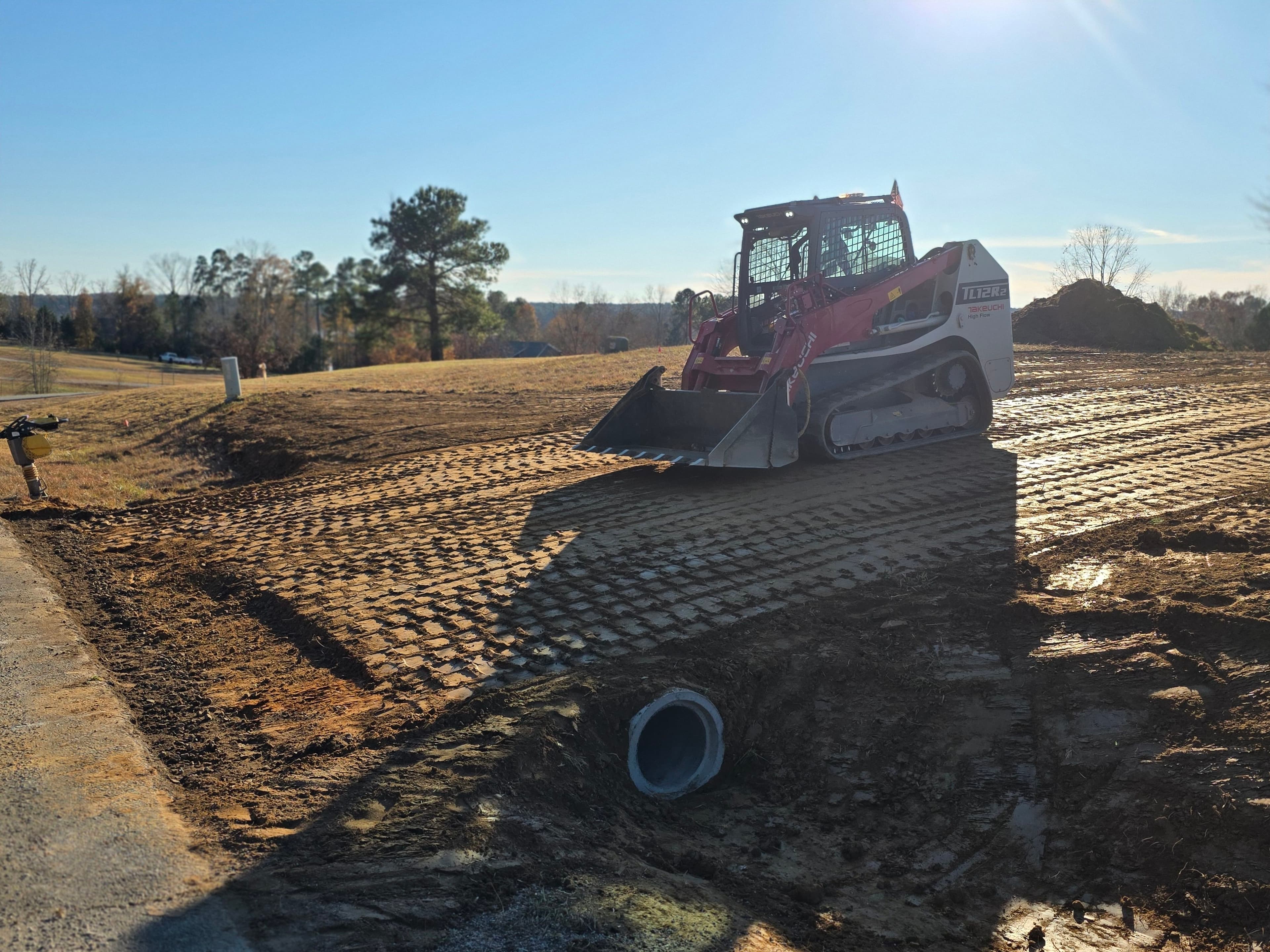
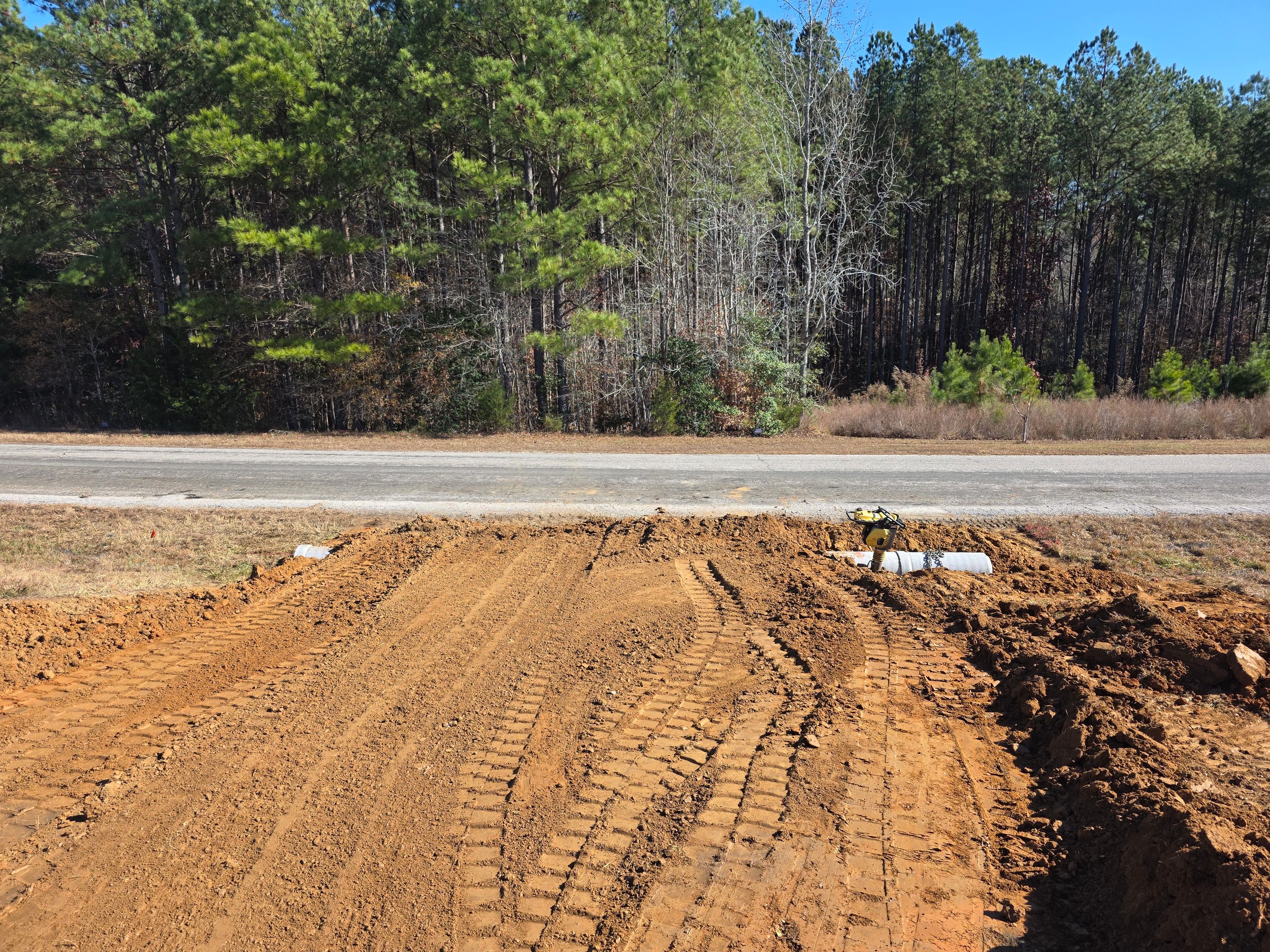
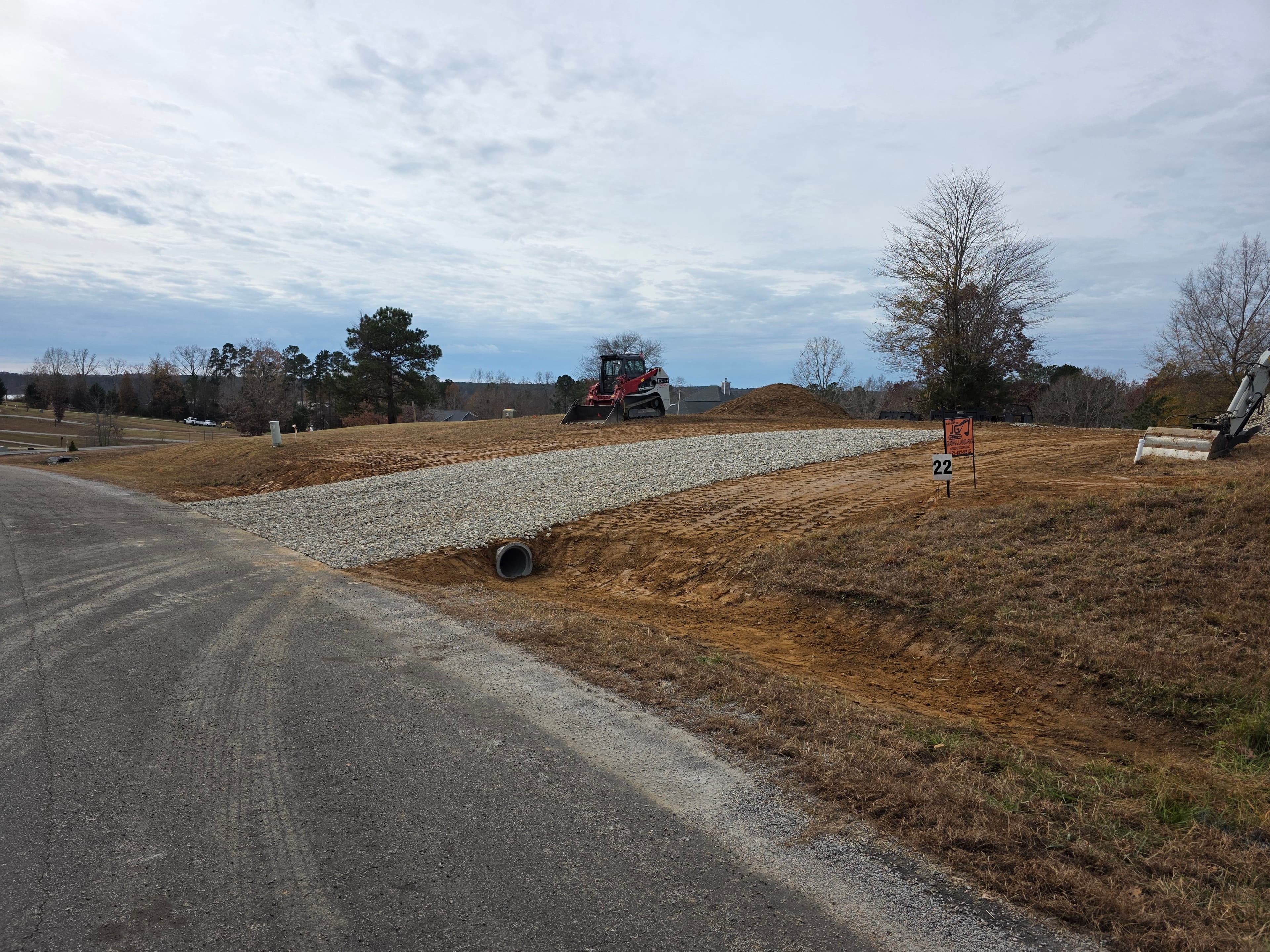
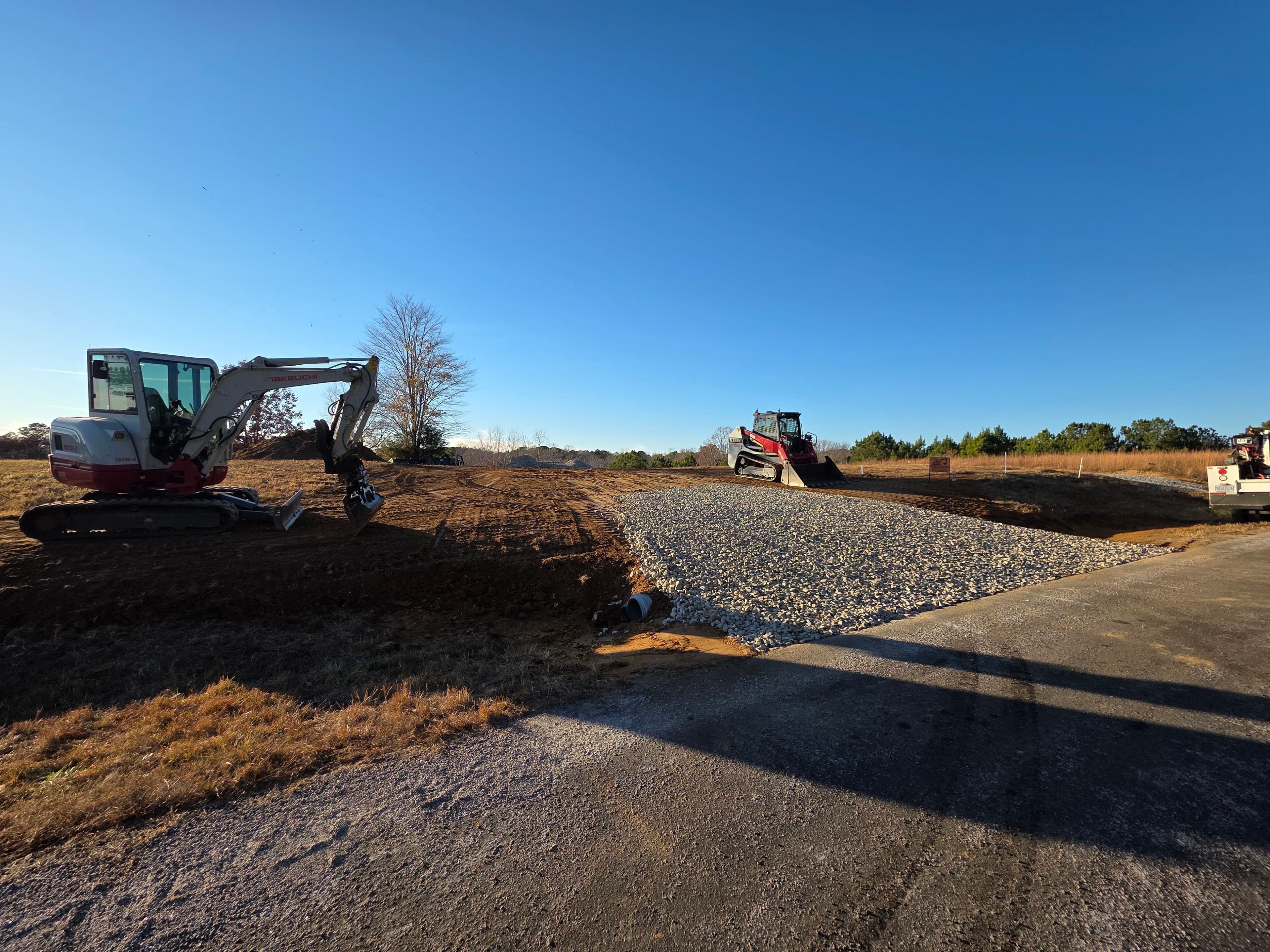
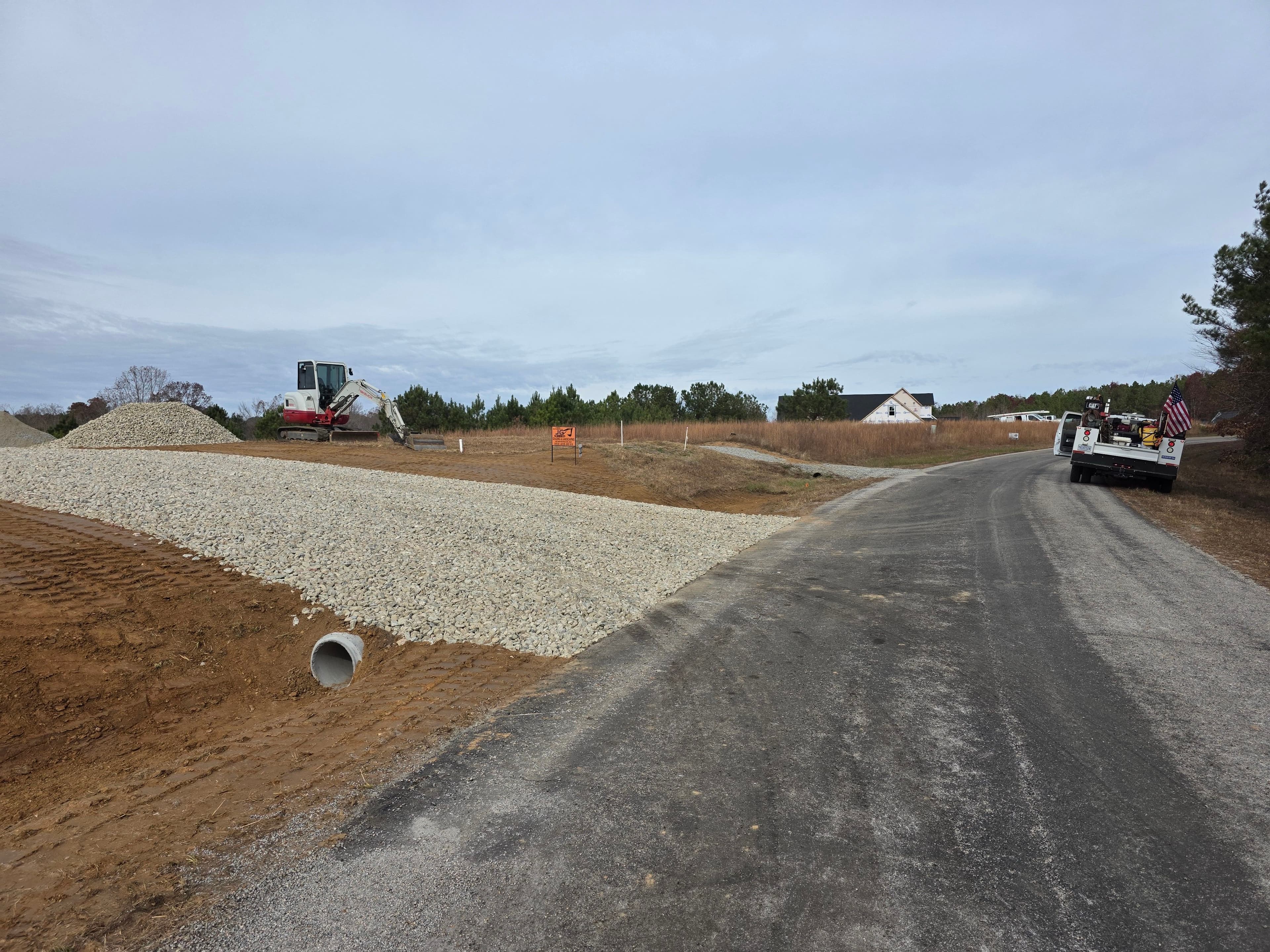
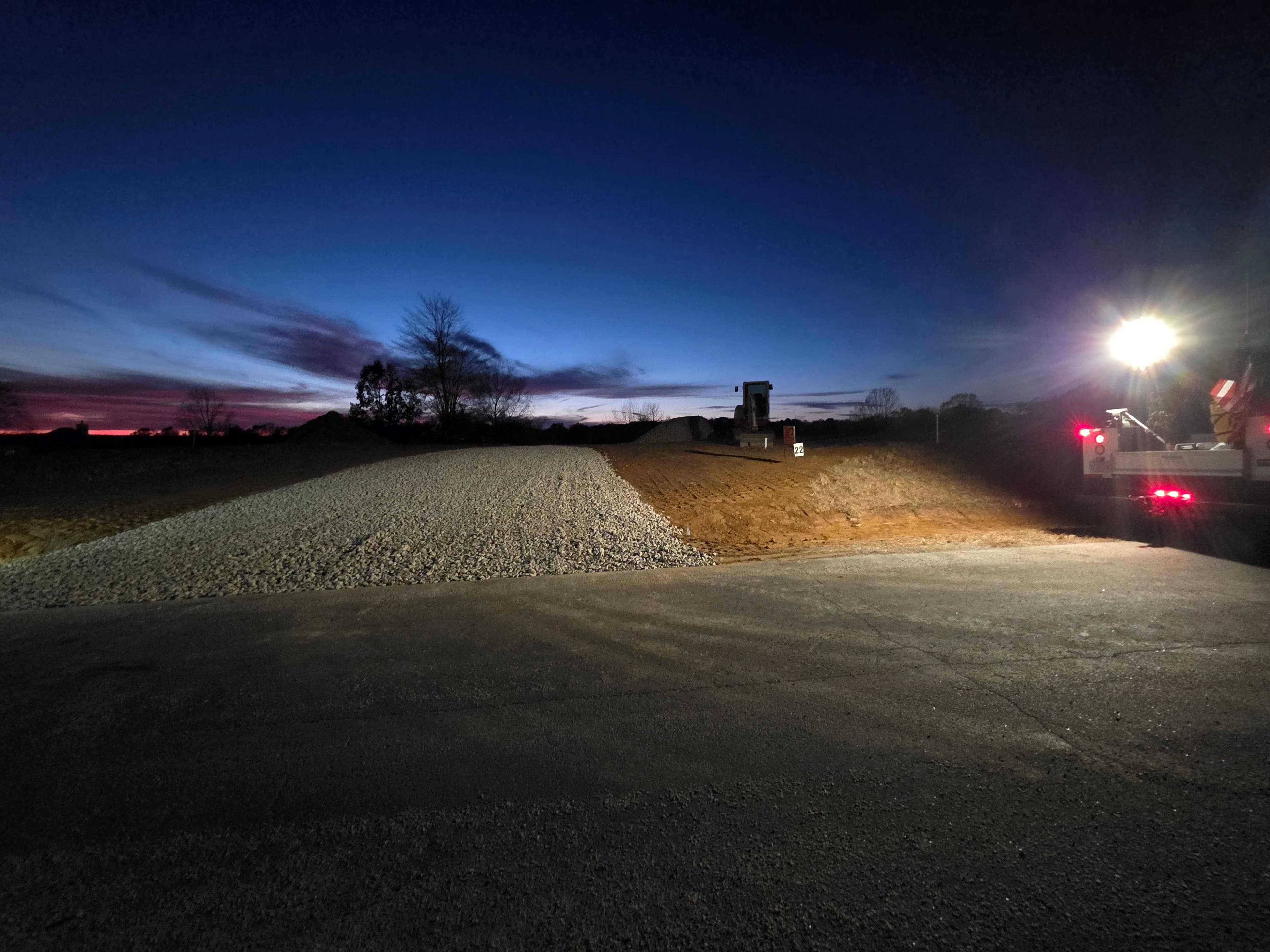
Built Right from the Base Up
A good gravel driveway starts before the first load of stone is spread. If the ground underneath is soft, uneven, poorly shaped, or holding water, adding more gravel on top may only hide the problem for a little while. That is why we pay attention to the base, the slope, the surface shape, and the drainage before deciding what the driveway actually needs.
Some gravel driveways need a full new installation. Some need to be rebuilt in problem areas. Others may only need to be regraded, reshaped, compacted, and topped with fresh gravel. We do not believe in selling more work than a driveway needs, but we also do not believe in pretending a thin layer of stone will fix a problem that is really caused by bad grade or poor drainage.
When we look at a driveway, we are looking at the whole picture: how water moves, where traffic runs, where gravel has washed out, where low spots are holding water, and where the driveway has lost its shape.
Why Proper Driveway Grading Matters
A driveway that isn’t built or graded correctly can cause problems you’ll see almost immediately — or worse, problems that show up after the first hard rain. Without the right base, slope, and drainage, you can end up dealing with washouts, ruts, potholes, standing water, soft spots, and a surface that constantly shifts around.
A lot of people think gravel driveway work is just spreading stone, but that is not the case. If the driveway has the wrong shape, adding more gravel may only cover the problem for a little while. Water is always going to find the low spot. If it sits on the driveway or runs straight down the middle of it, it will eventually start moving stone, cutting ruts, and breaking down the surface.
That is why the grade of a gravel driveway matters so much. A driveway needs to be shaped so water can get off the surface instead of staying in it. Depending on the property, that may mean building or restoring a crown, pitching the driveway to one side, cutting down high spots, filling low areas, or reshaping sections that have gotten uneven over time.
Every driveway is different. The right fix depends on the layout, slope, soil, drainage, existing stone, and how the driveway is actually being used. A driveway going to a home, shop, garage, barn, or farm area may not need the exact same approach.
That is where experience matters. Gravel driveway work is not just about making it look good the day we leave. It needs to be shaped in a way that makes sense for the property, helps water move the right direction, and gives the driveway a better chance to hold up over time.
New Gravel Driveway Installation
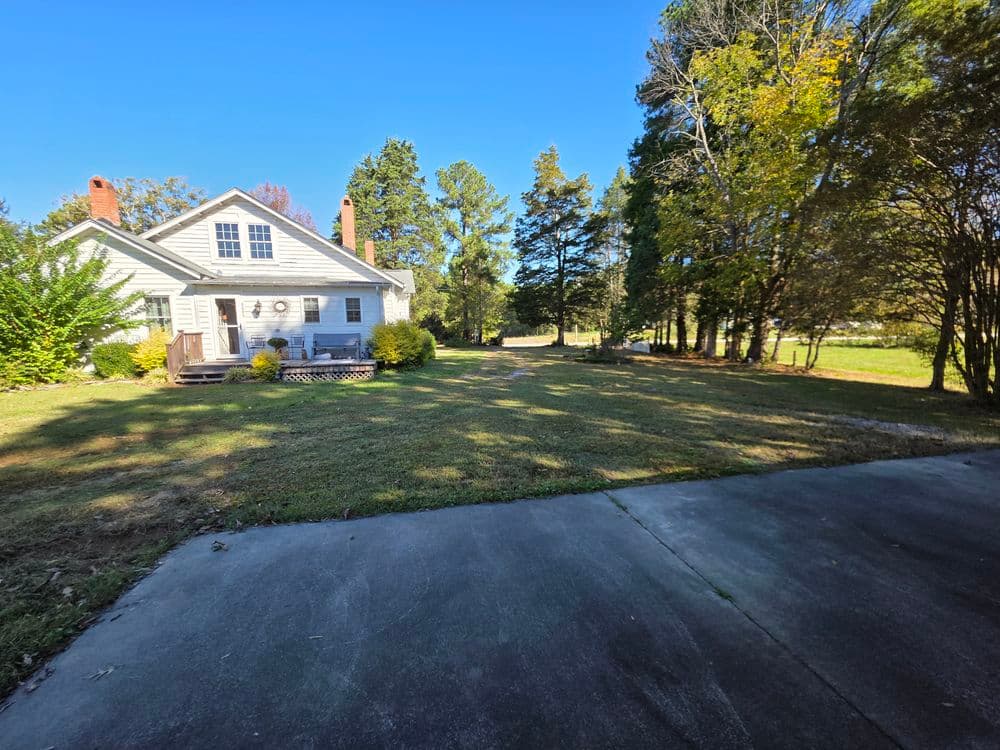
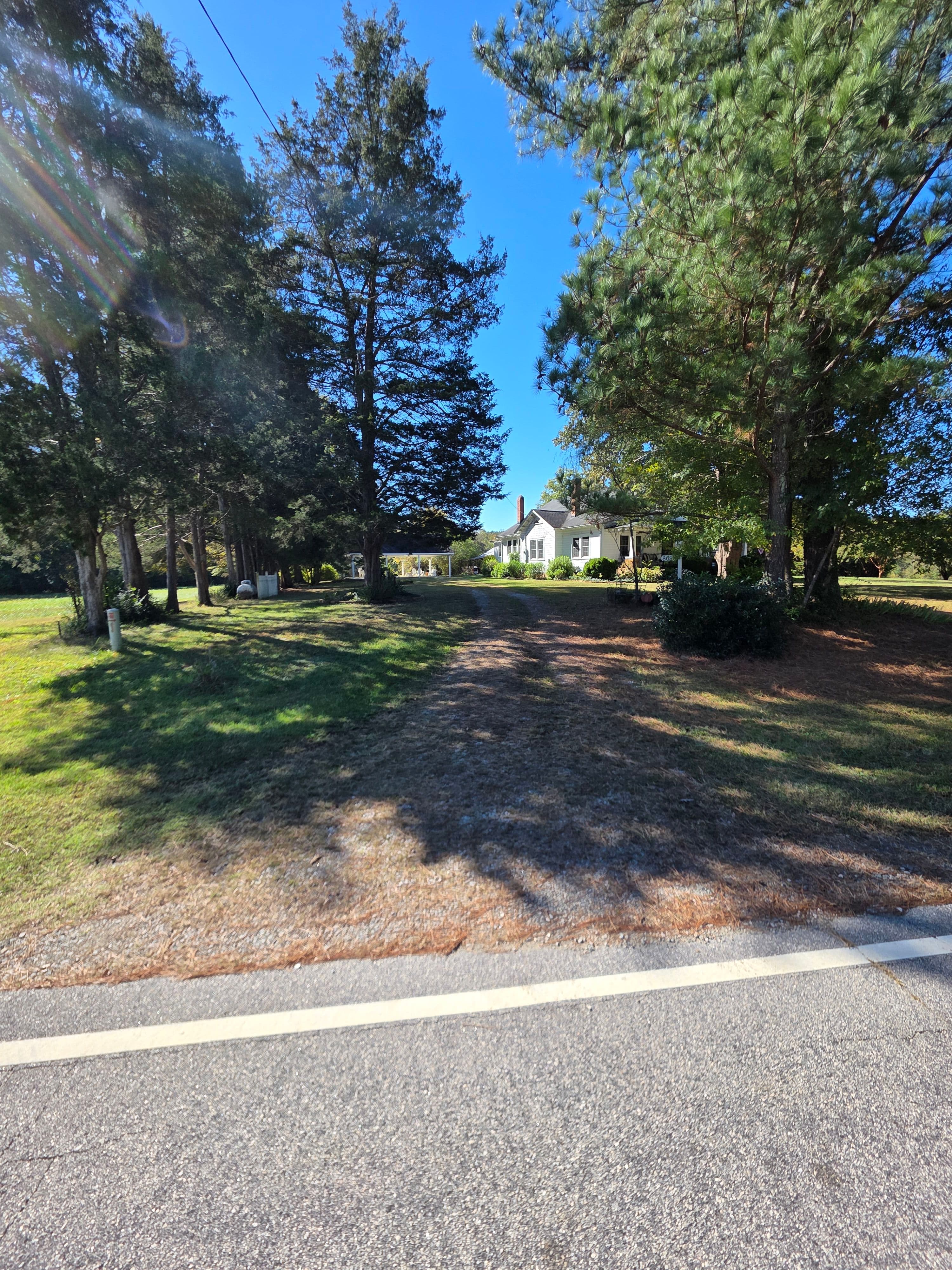
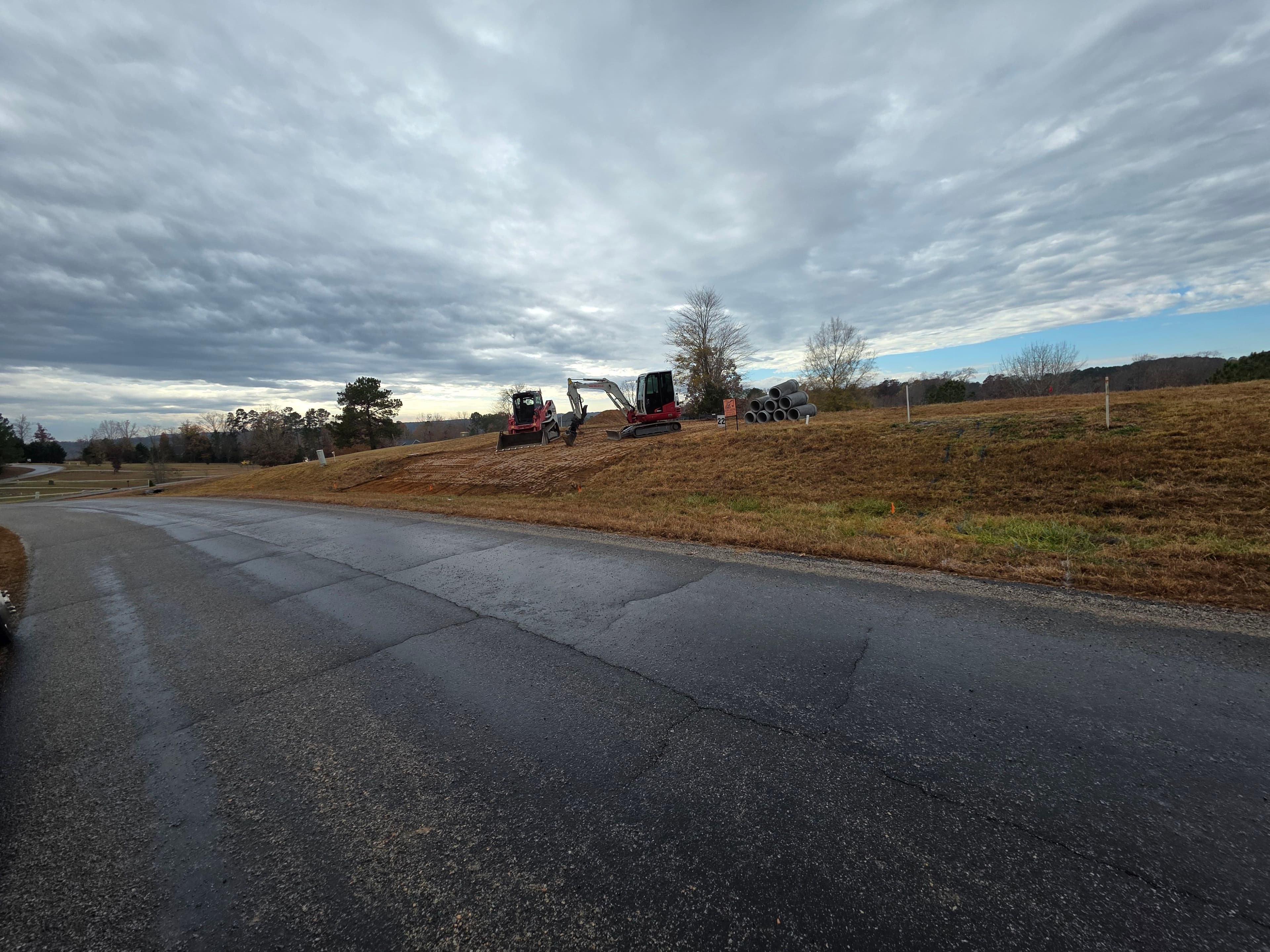
For a new gravel driveway install, we start by looking at the layout, entrance, slope, drainage, and how the driveway is actually going to be used. A driveway going to a home, garage, shop, barn, farm area, or parking spot is not always going to need the same approach.
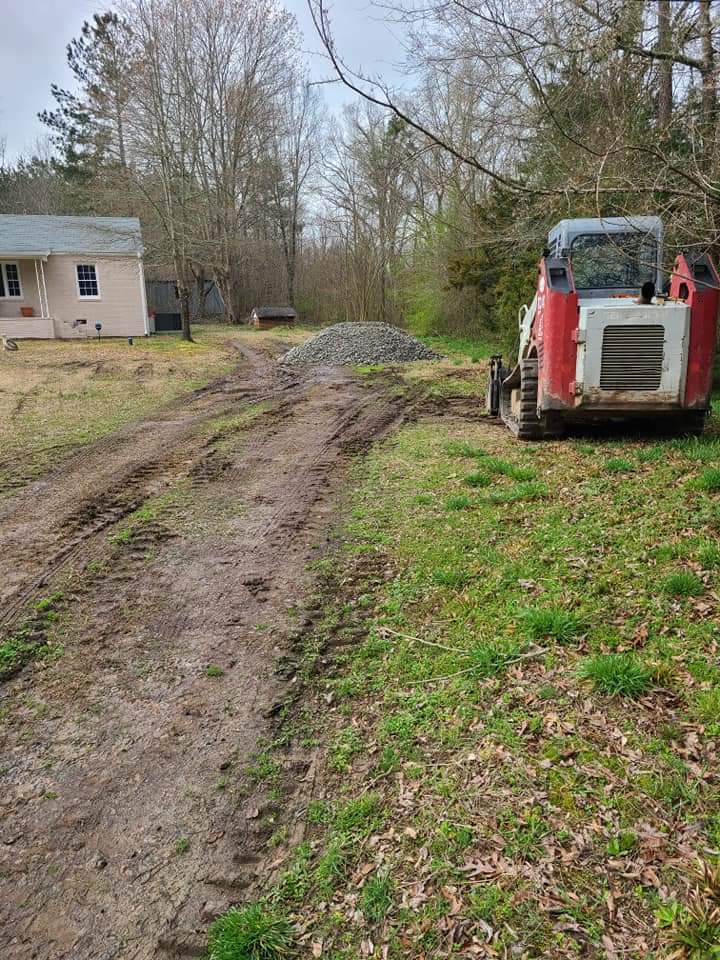
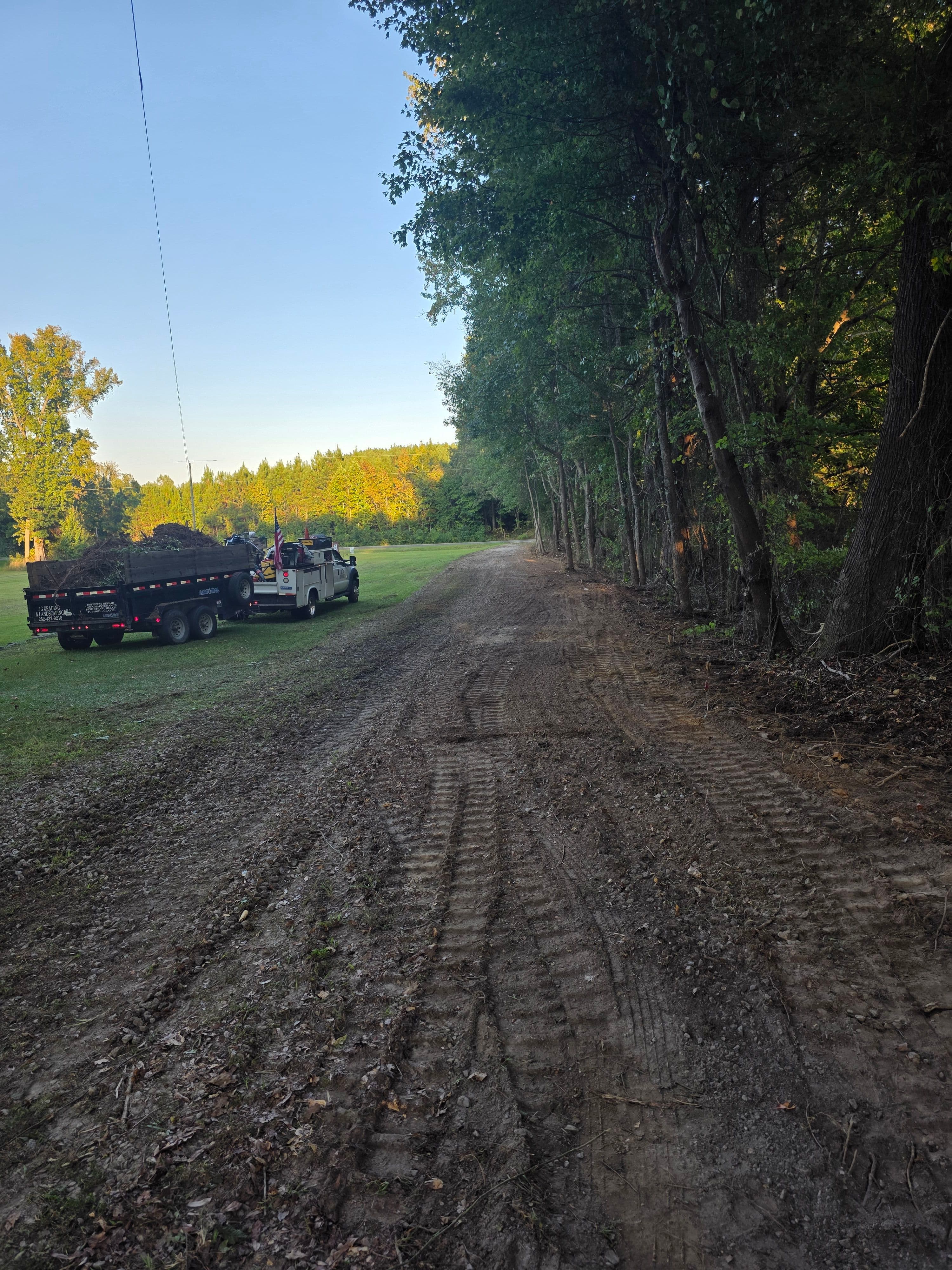
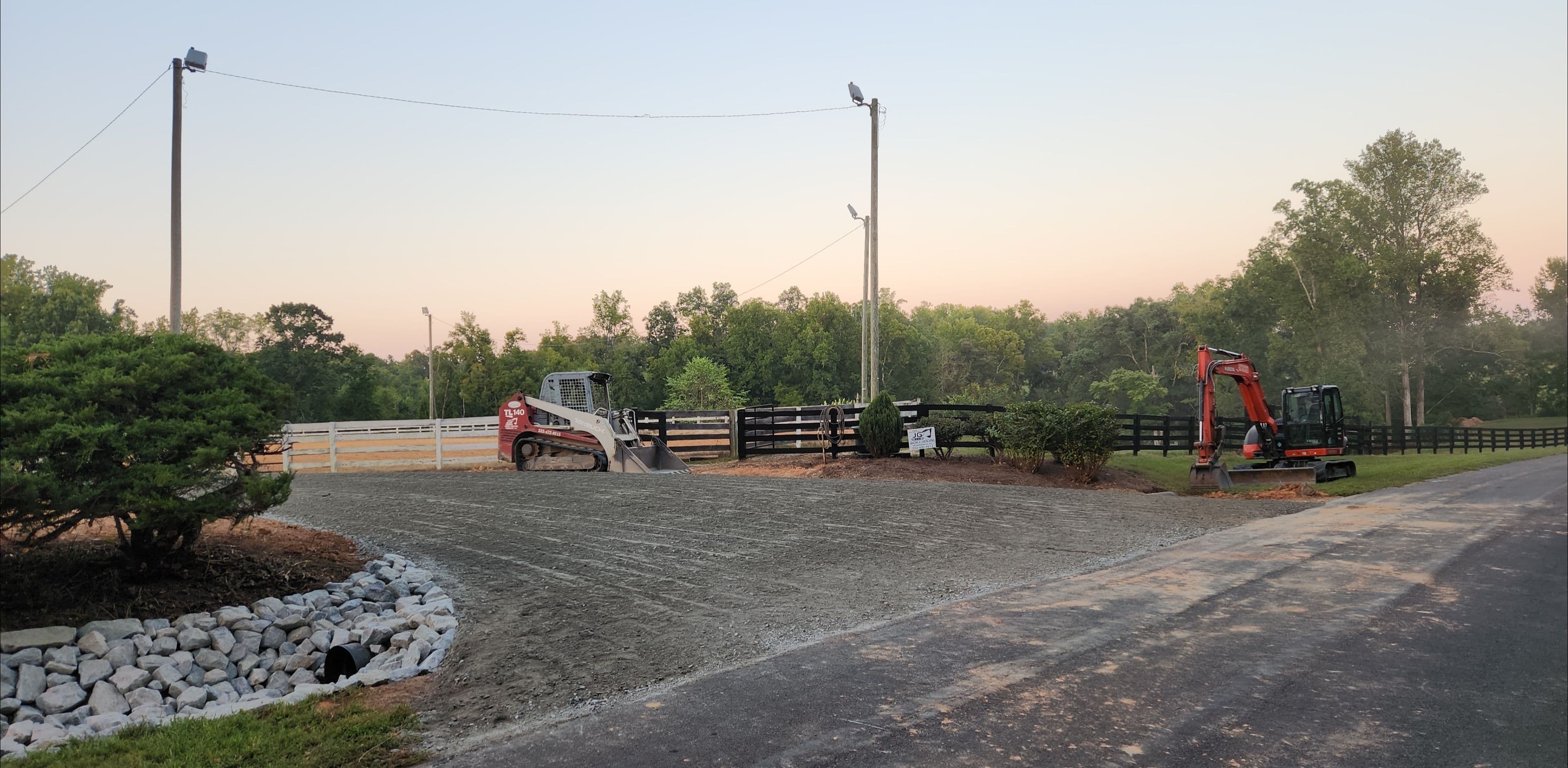
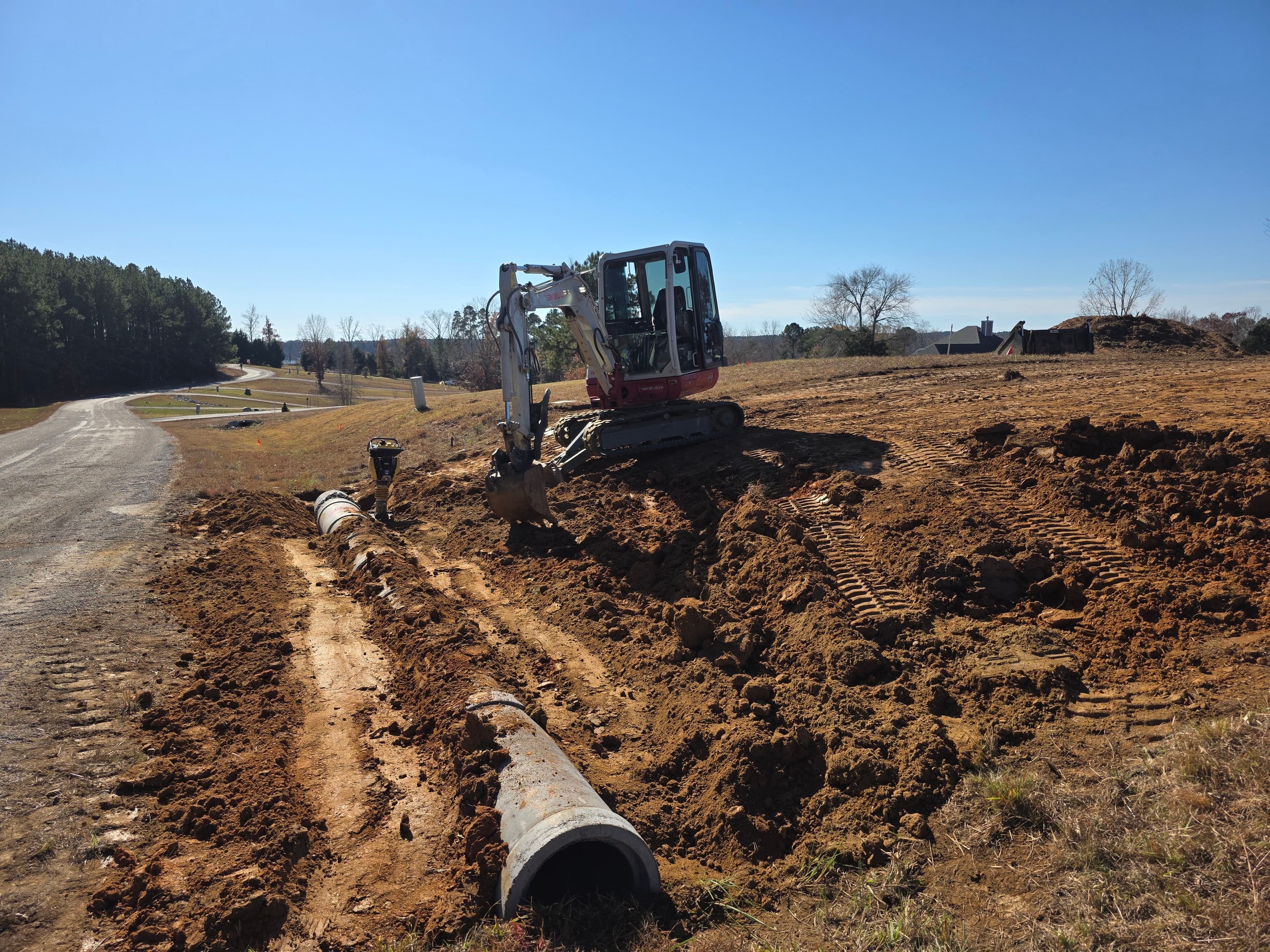
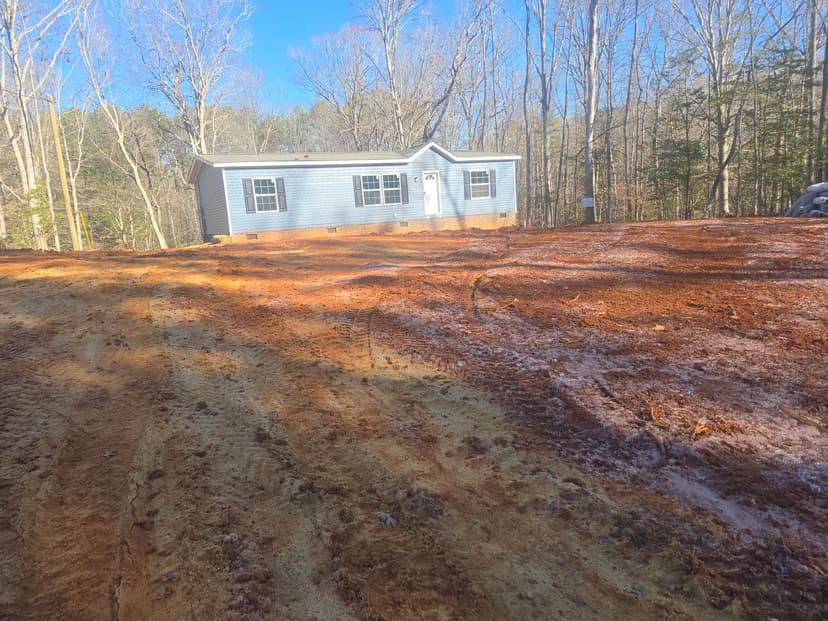
Once we understand the layout, the driveway area can be shaped, graded, and prepared for stone. Depending on the property, that may mean correcting soft areas, shaping the subgrade, building the driveway up properly, using fabric where it makes sense, adding base stone, or handling drainage before the finished gravel ever goes down.
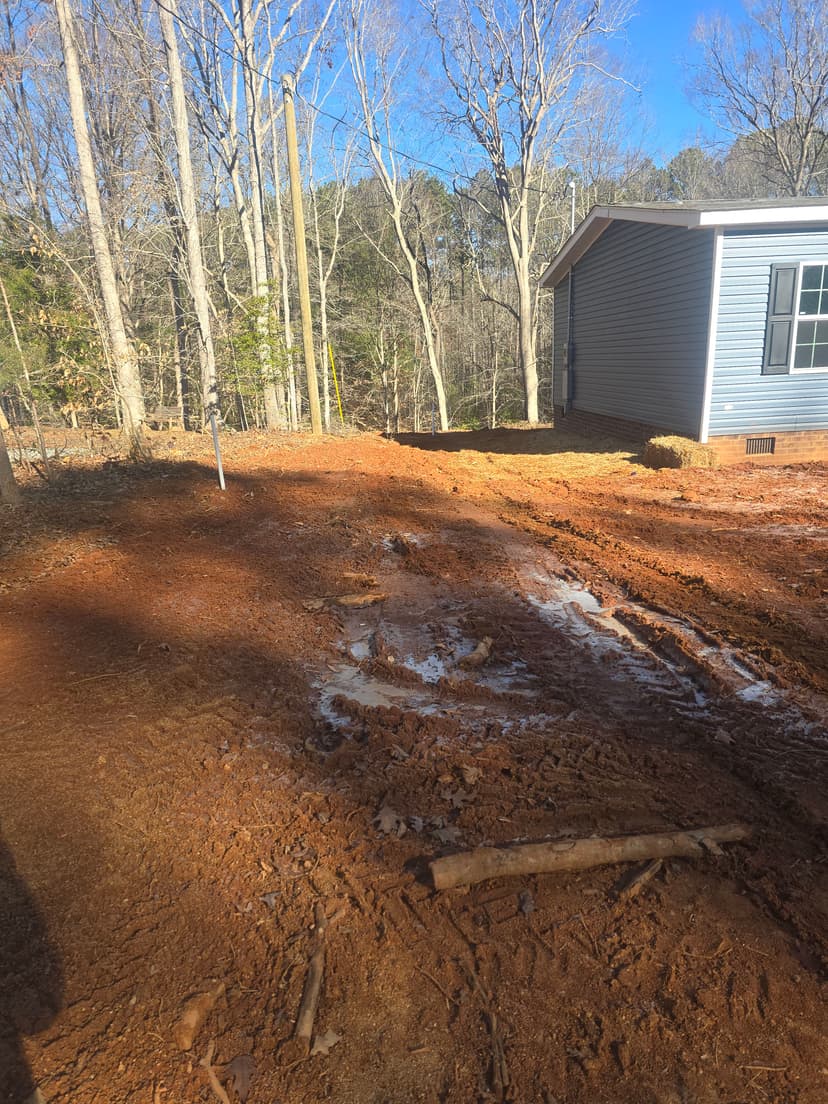
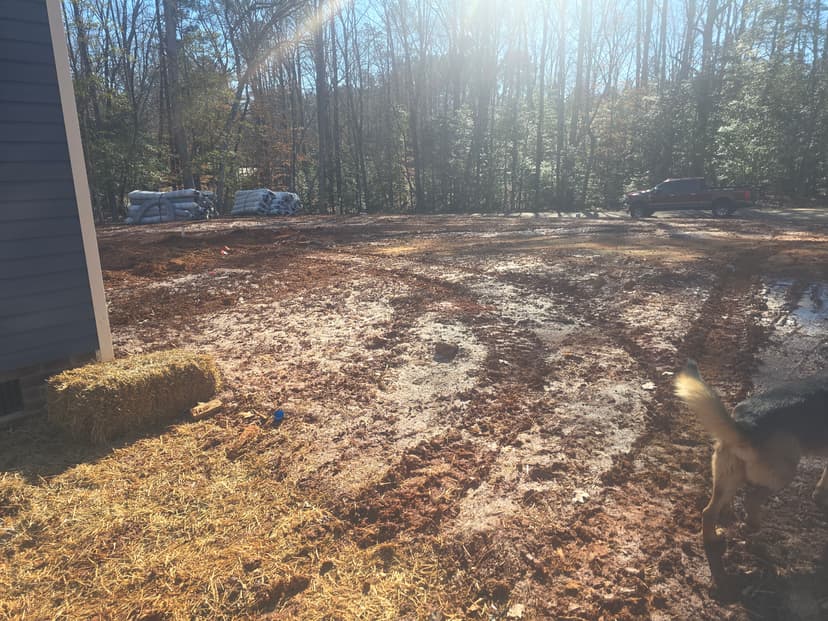
A lot of driveway problems start because the prep work was skipped. If the ground is soft, the grade is wrong, or water is already crossing the driveway, just spreading gravel over it is not going to fix the real problem for long.
Our goal is to build a gravel driveway that looks clean, drives well, drains better, and has the right foundation underneath it. We would rather be upfront about what the driveway needs than make it look good for a few weeks and have the same problems come back after the first hard rain.
Gravel Driveway Regrading
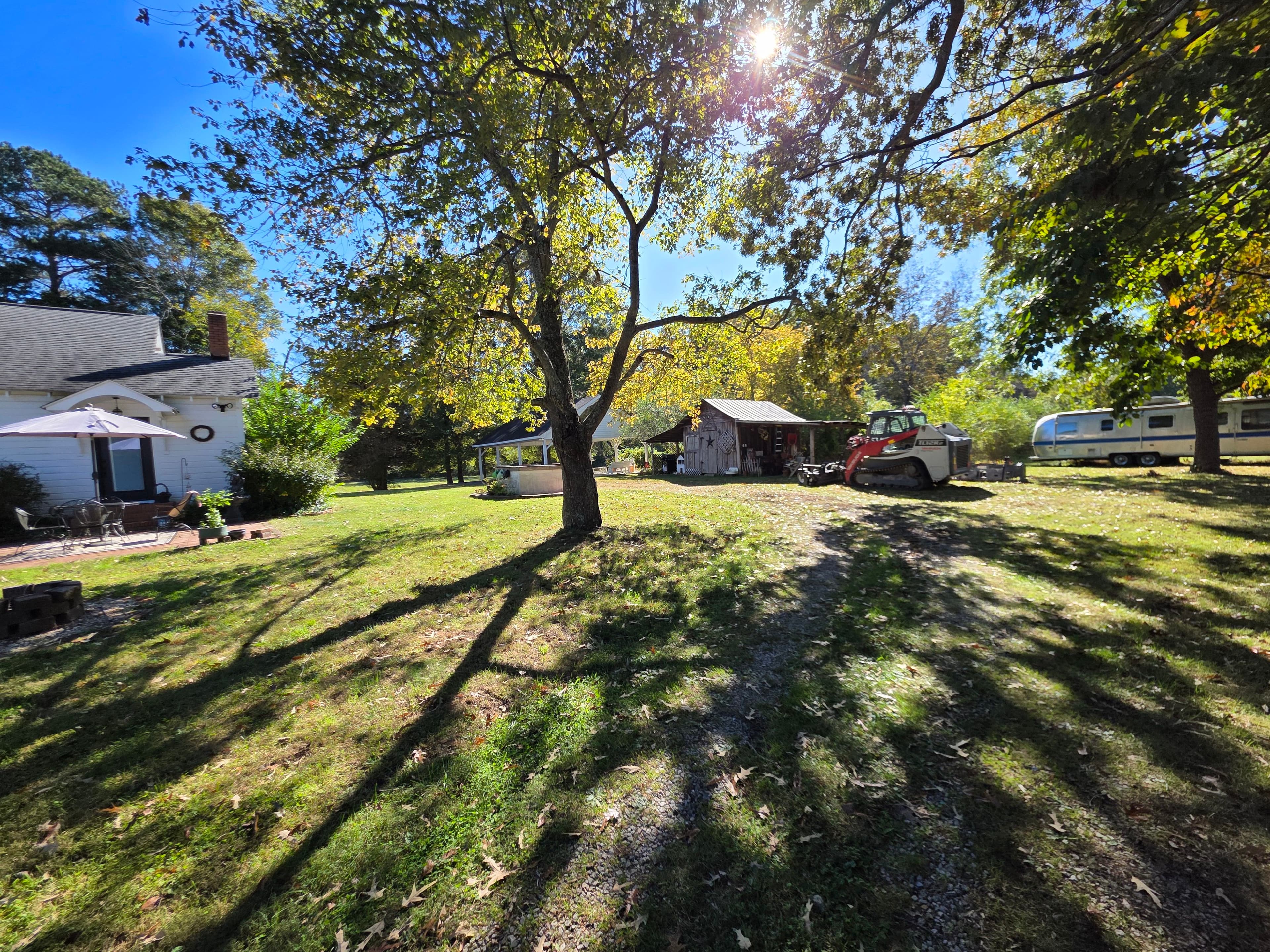
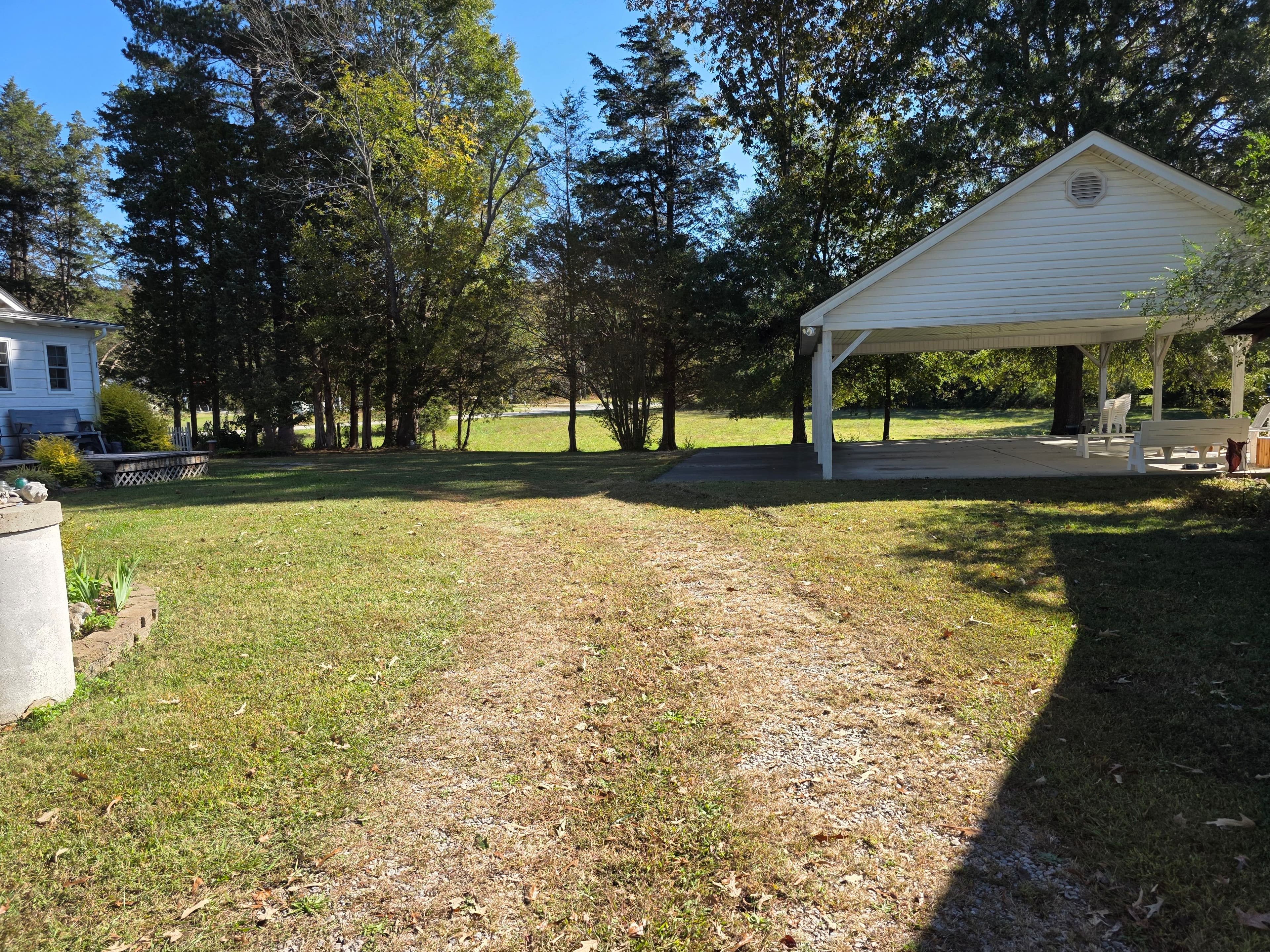
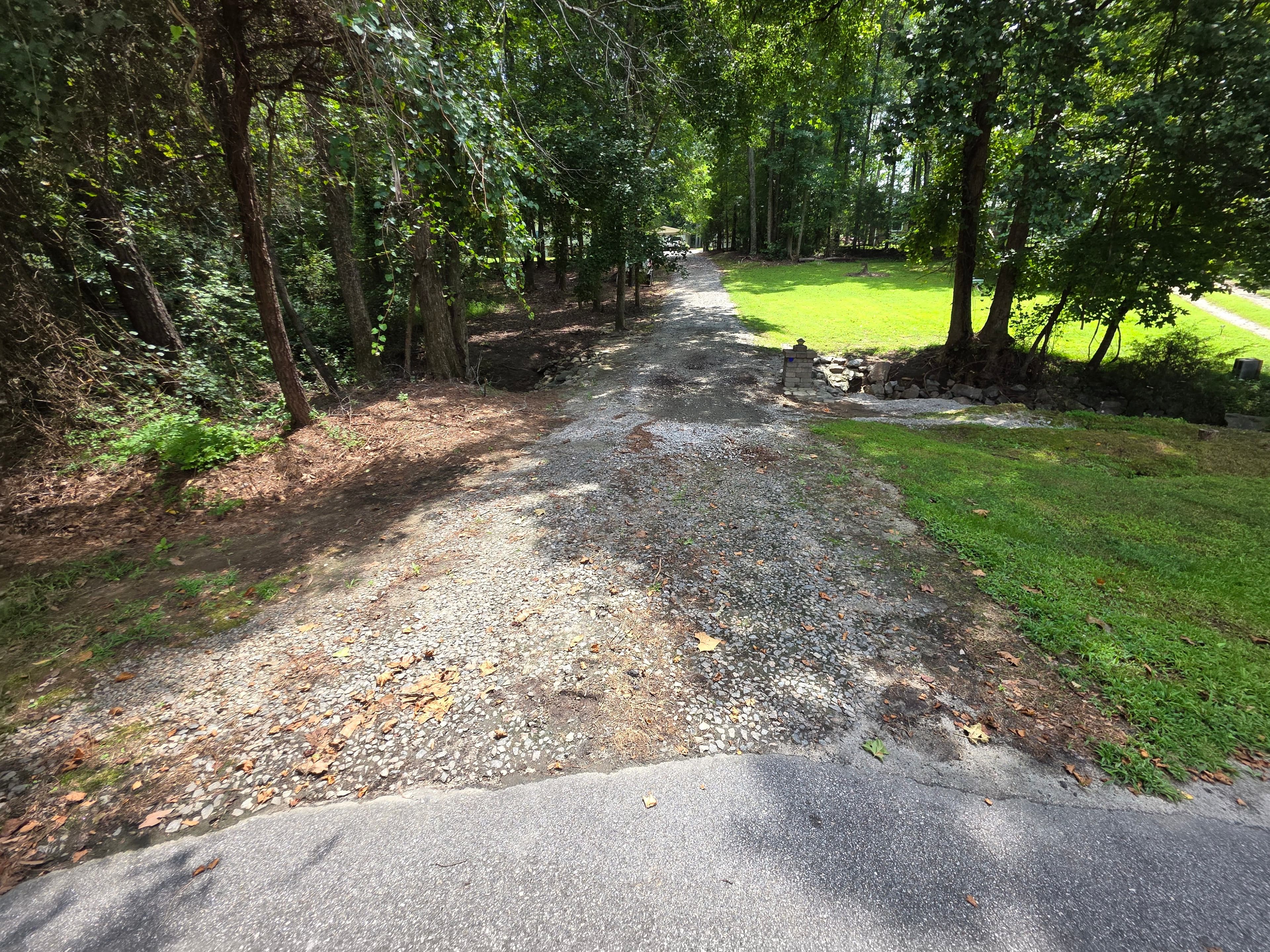
Not every gravel driveway needs to be torn out or started over from scratch. A lot of existing gravel driveways still have usable stone and a decent base, but over time they can get rough, uneven, thin, washed out, or lose their shape.
In those cases, regrading can make a big difference. Instead of just dumping more gravel on top of a rough driveway, we look at what is already there and see what can be worked back into place. When possible, we can pull usable gravel back into the driveway, smooth out rough areas, cut down high spots, fill low spots, restore the crown or pitch, and add fresh gravel where it is actually needed.
Regrading is often a smart option when the driveway still has a foundation but needs to be cleaned up and brought back into shape. It can help the driveway drive smoother, look cleaner, shed water better, and make the fresh gravel go farther because the surface underneath is shaped the right way.
If the driveway has bigger problems, like soft areas, major washouts, or water crossing it in the wrong place, we will be upfront about that too. Regrading can fix a lot, but it still has to be done based on what the driveway actually needs.
Gravel Driveway Repair & Fresh Gravel
Gravel driveways take a beating from rain, traffic, turning tires, delivery trucks, trailers, and everyday use. Over time, gravel can spread out, sink, wash away, get pushed into the edges, or disappear into soft spots. That can leave potholes, ruts, muddy areas, thin gravel, and sections of driveway that just do not look or drive like they should.
When we repair a gravel driveway, we look at what caused the problem first. Sometimes the driveway simply needs fresh gravel and grading. Sometimes water is the real issue. Sometimes the base is too thin. Sometimes the driveway has lost its shape and needs to be reworked before adding more stone.
That is why we do not treat every driveway the same. If it needs fresh gravel, we can add it. If it needs to be regraded first, we will tell you. If drainage is causing the same spots to keep washing out or holding water, we are going to point that out too.
The honest answer depends on what is actually happening on the property. Our goal is to fix the driveway in a way that makes sense, not just cover up the problem with a load of stone and hope it holds.
Built to Look Clean and Hold Up
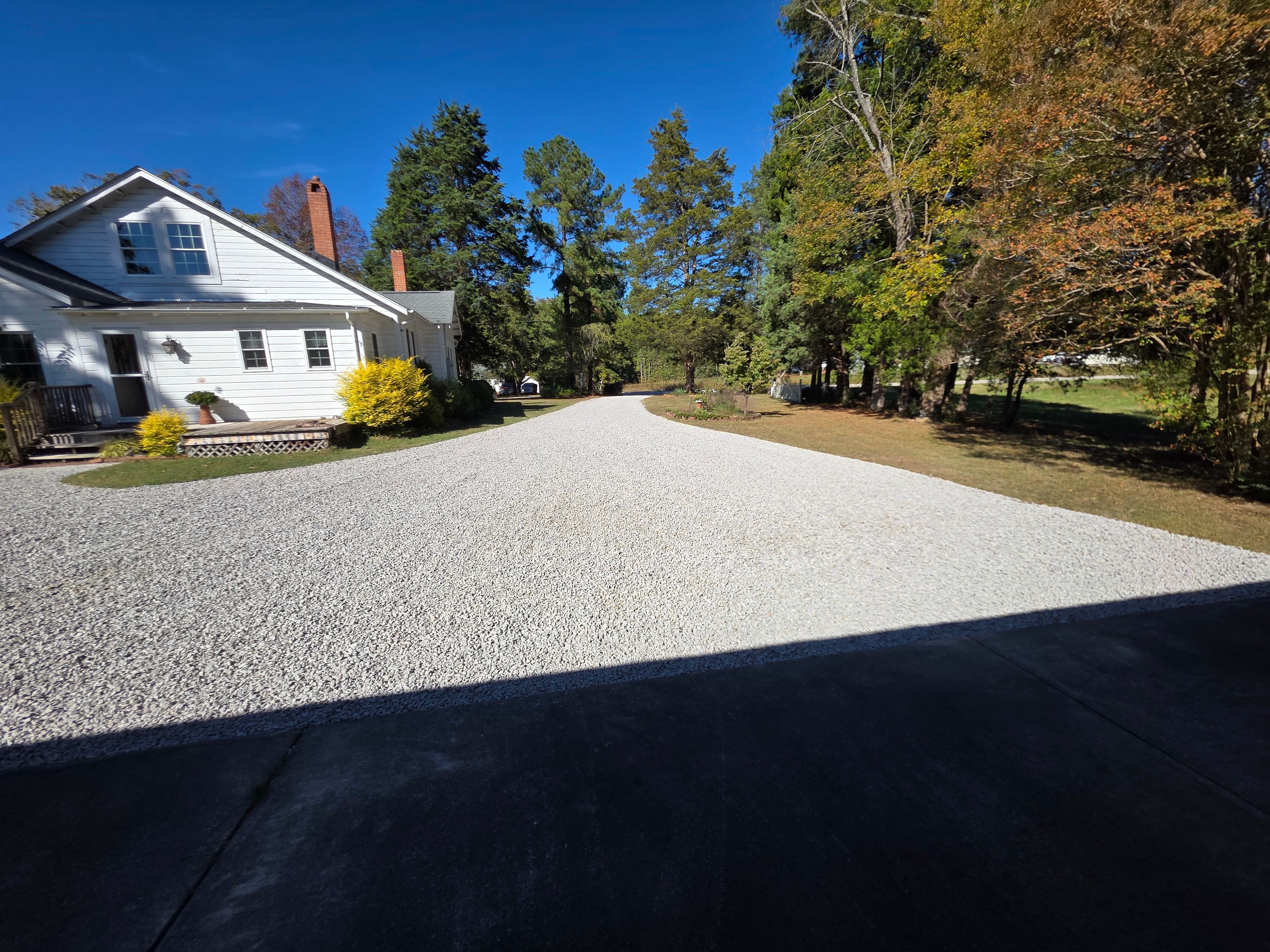
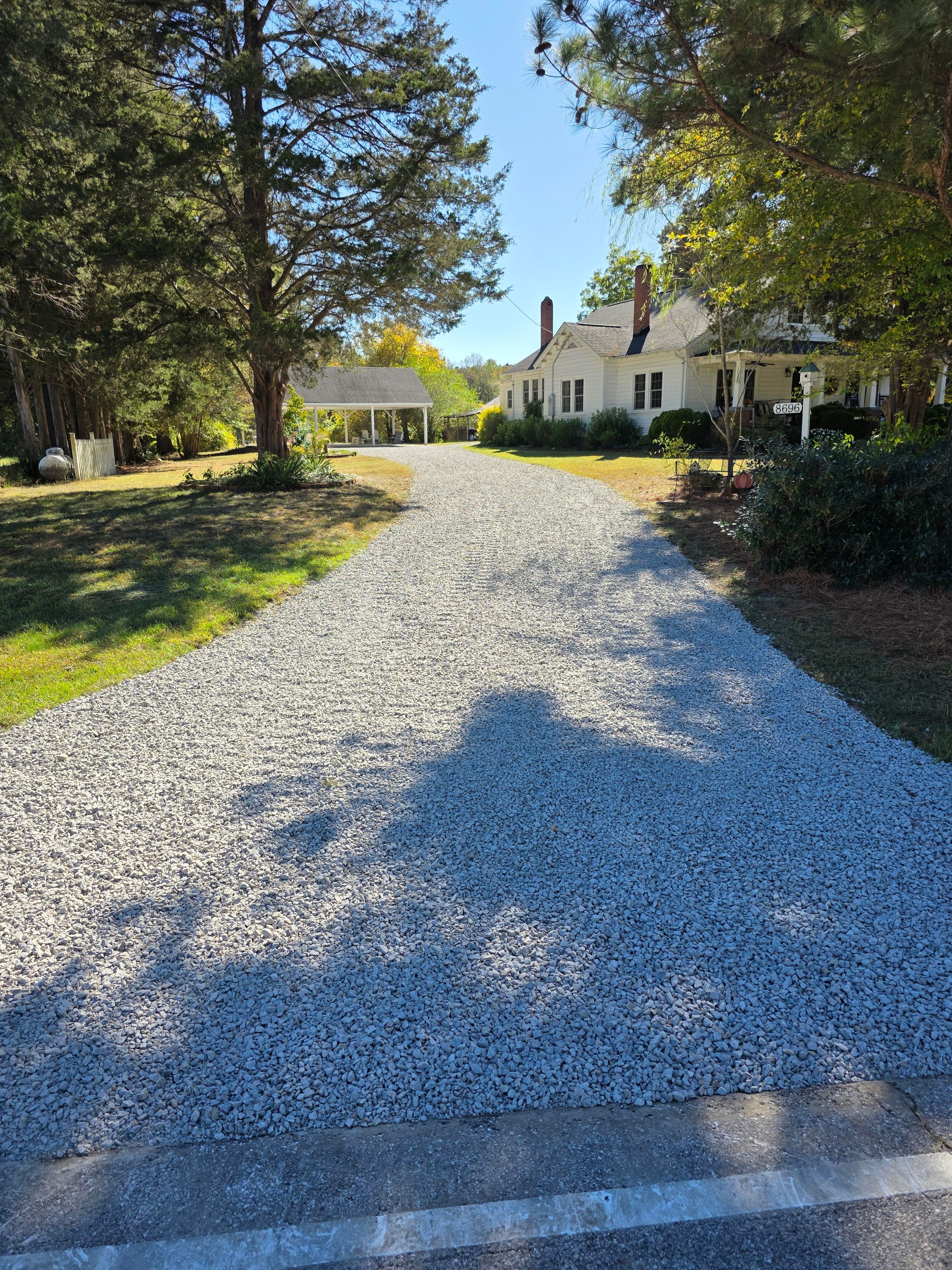
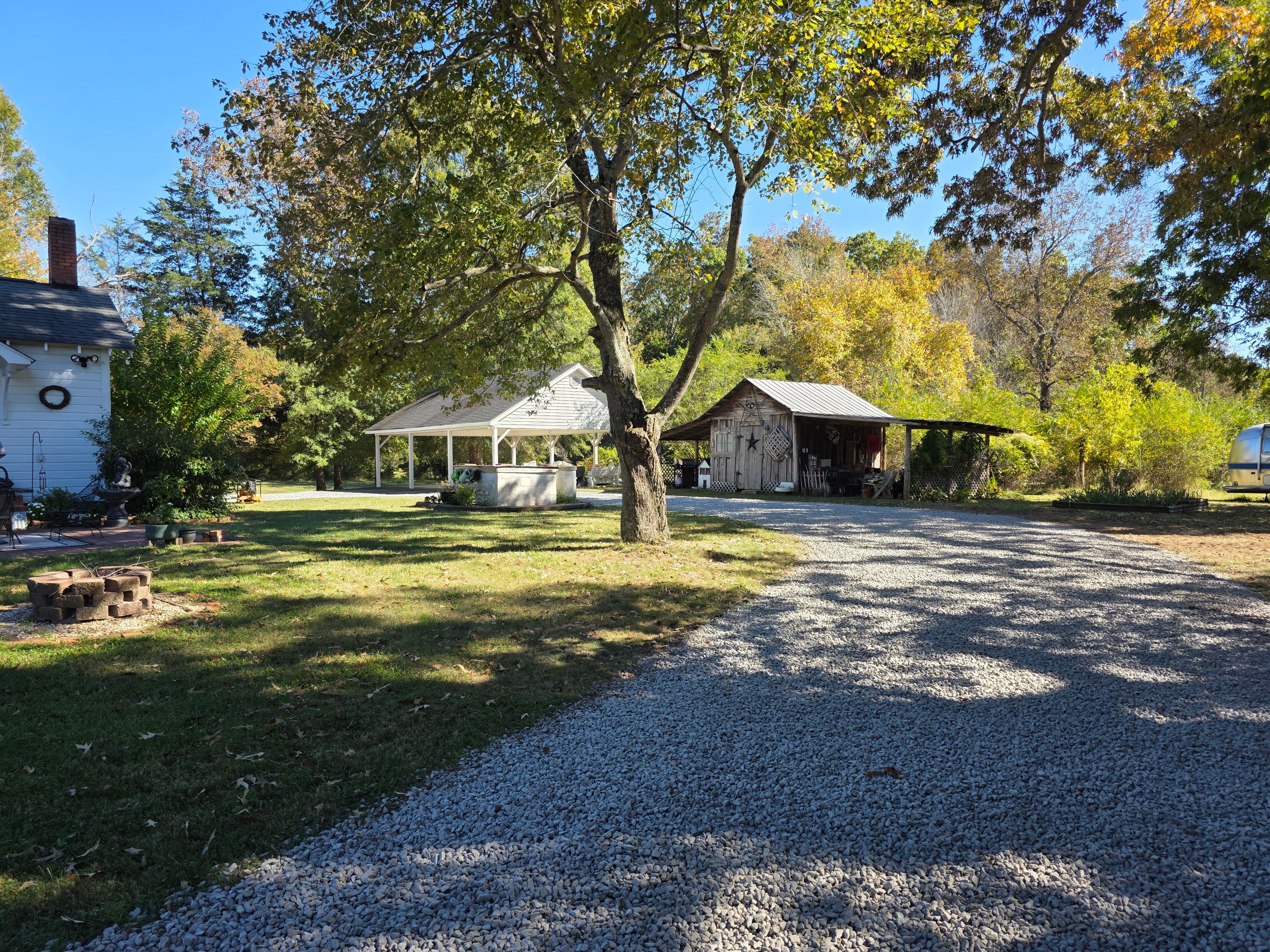
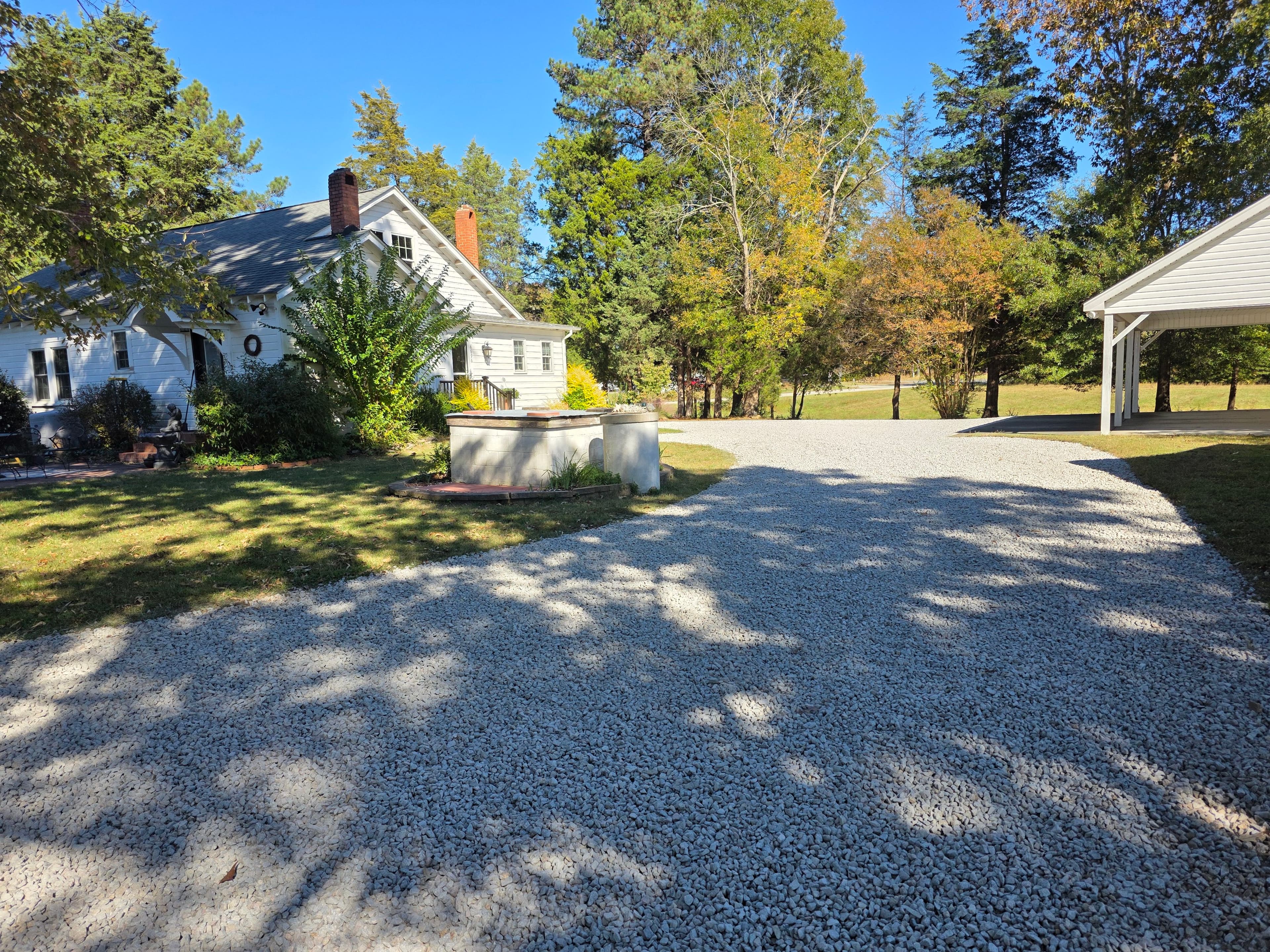
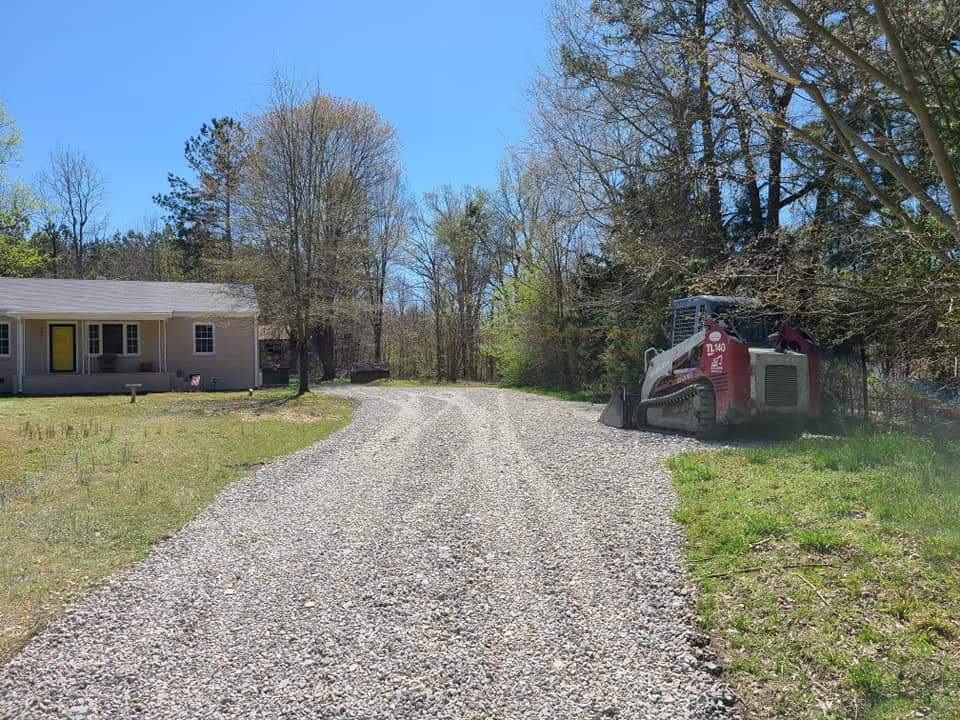
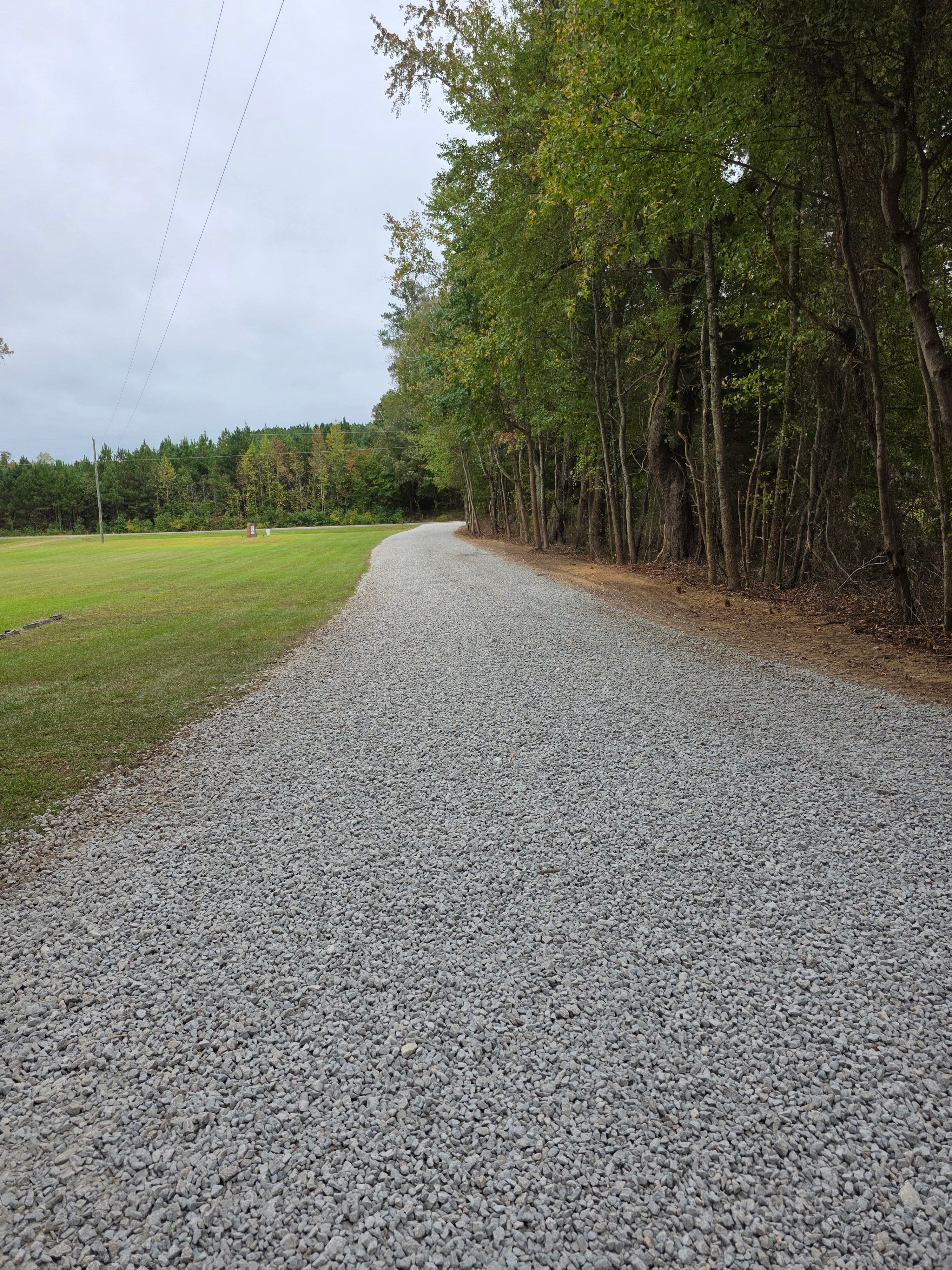
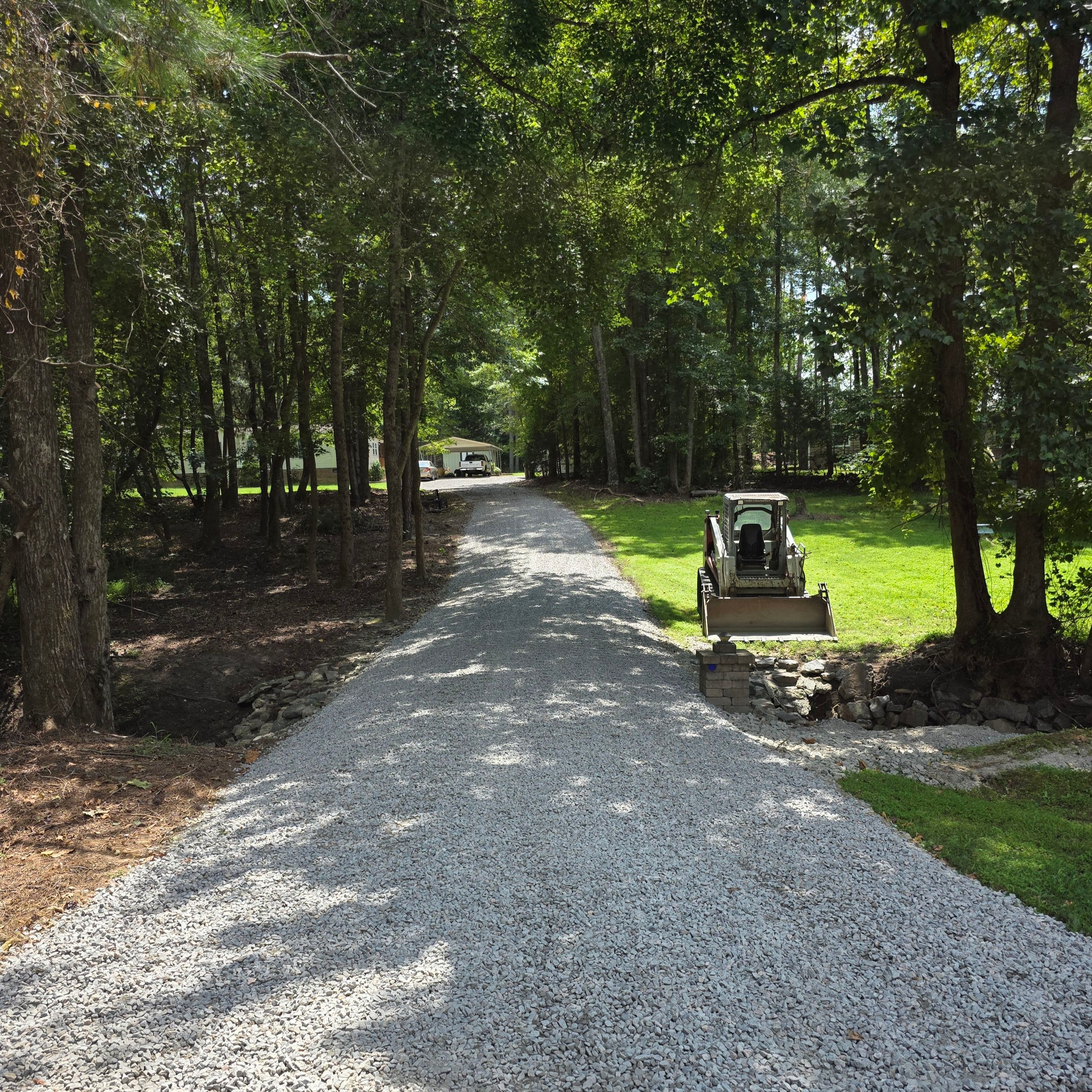
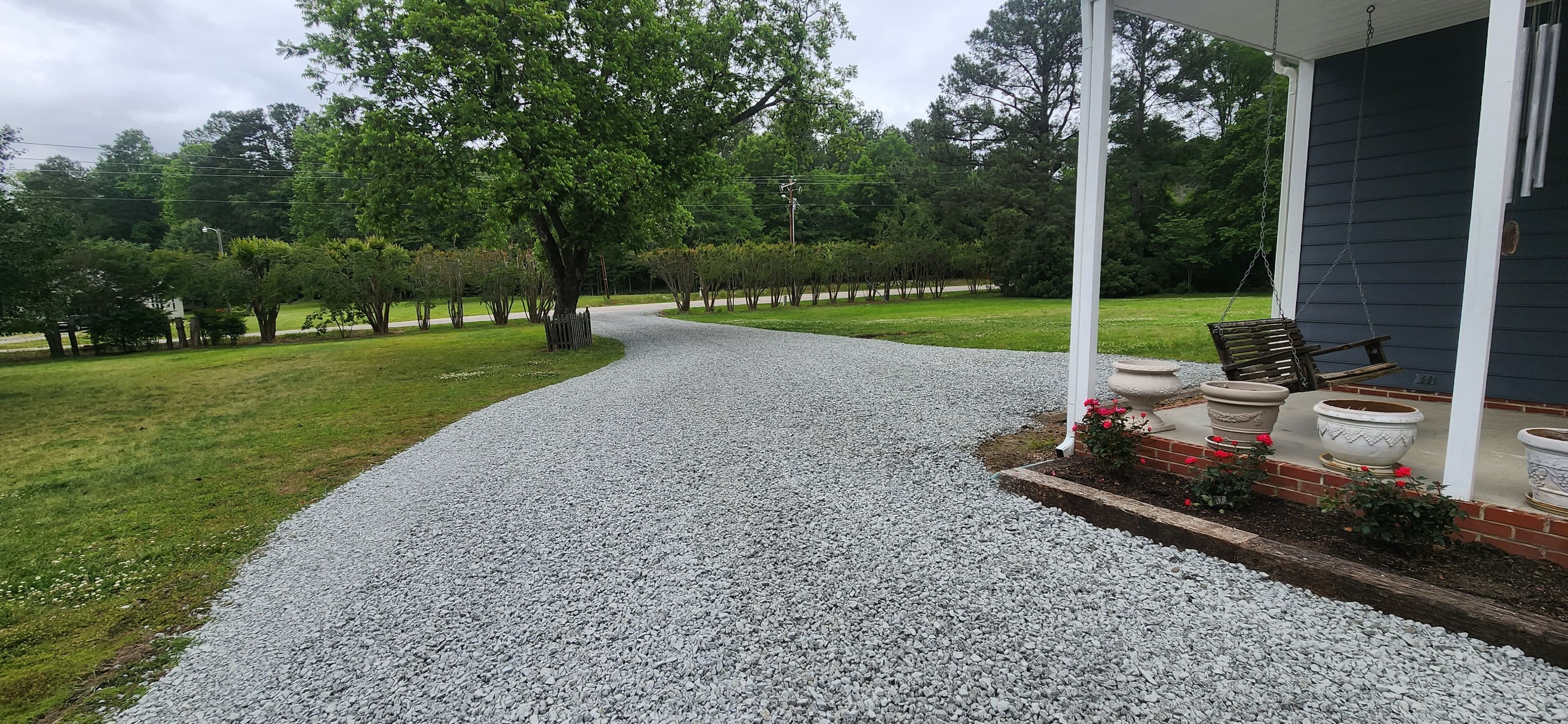
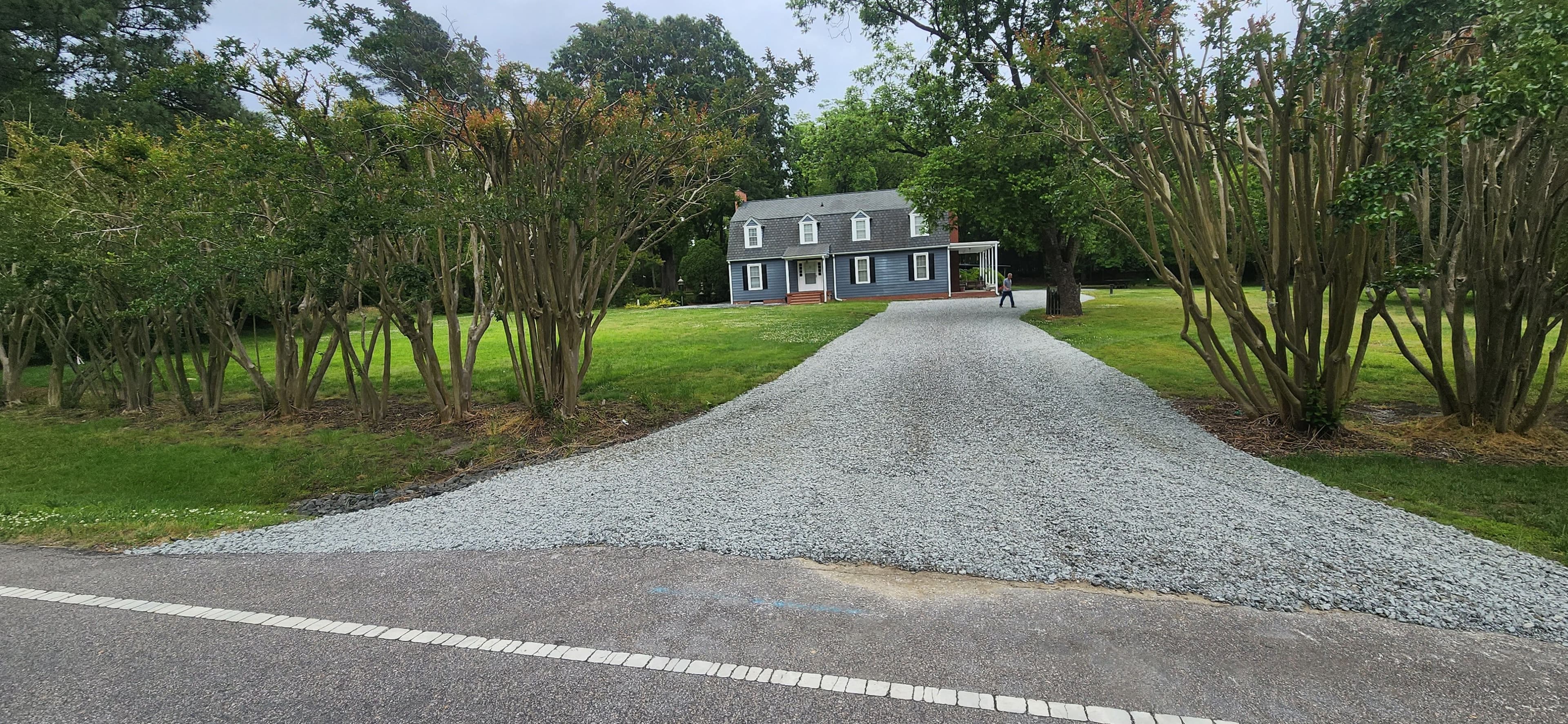
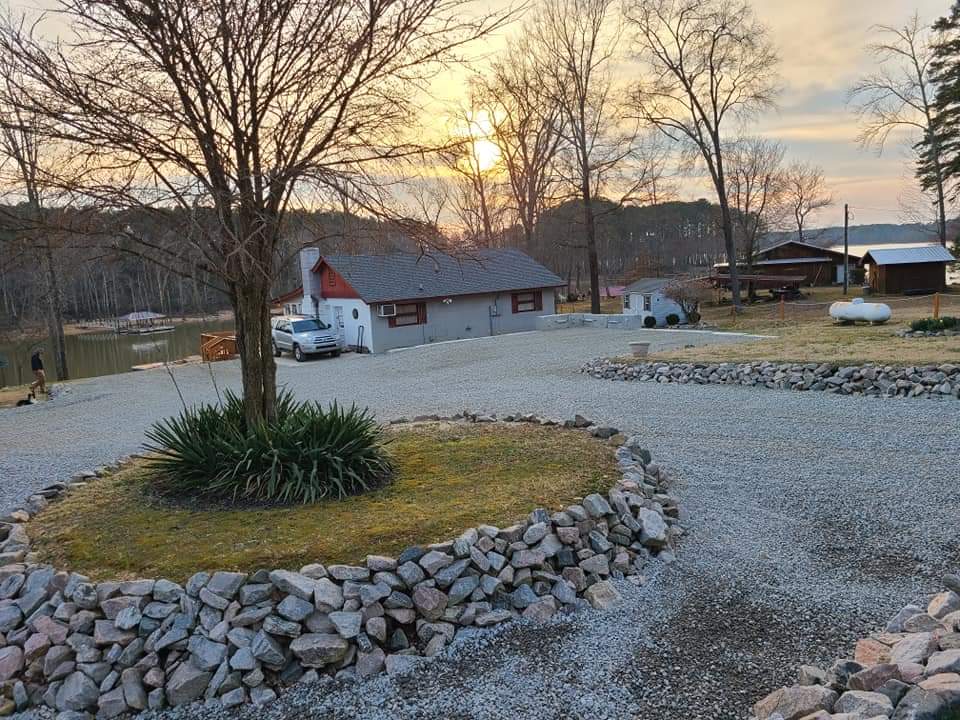
A finished gravel driveway should not just be a pile of stone spread across the ground. It should have a clean shape, a solid surface, and a grade that makes sense for the property. The driveway needs to look good when we leave, but it also needs to be built in a way that gives it a better chance to hold up through rain, traffic, delivery trucks, trailers, and everyday use.
Proper Stone Placement — We use the right type and amount of gravel for the job instead of treating every driveway the same. Some driveways need a heavier base. Some need a fresh top layer. Some need problem areas fixed before any new gravel is added. Depending on the driveway, that may include ABC stone, crush and run, #57 stone, #67 stone, or another stone that makes sense for the site.
Grading That Makes Sense — We shape the driveway so water has a better chance of moving off the surface instead of sitting in low spots, running straight down the middle, or washing gravel away. Sometimes that means restoring a crown, sometimes it means pitching the driveway to one side, and sometimes it means reshaping problem areas that have gotten out of hand over time.
Compaction Where Needed — A driveway that is only spread and never packed can stay loose, shift around, and break down faster. Depending on the job, we use the right equipment to help tighten the surface and improve the finished result. Gravel still needs maintenance over time, but proper compaction can make a big difference in how the driveway feels and holds together.
Honest Recommendations — If your driveway only needs regrading and fresh gravel, we will tell you. If it needs more than that to fix the real problem, we will tell you that too. We would rather be honest upfront than sell a cheap fix that looks good for a few weeks and falls apart after the next hard rain.
Finished Appearance — The driveway needs to function, but it also needs to look clean when we leave. A properly shaped gravel driveway can improve the look of the whole property, especially around homes, garages, shops, barns, lake properties, and rural entrances.
Gravel Driveways for Homes, Farms & Rural Properties
We work on gravel driveways for homes, farms, lake properties, shops, barns, garages, and rural properties across our North Carolina service area. Some customers need a brand-new gravel driveway installed. Some need their existing driveway regraded and topped with fresh gravel. Others need help fixing potholes, ruts, standing water, washouts, thin gravel, or soft areas.
No matter the size of the job, the goal is the same: build or repair the driveway in a way that makes sense for the property. We want the finished driveway to look right, drive better, drain better, and give the customer a better finished product than what they had before.
Our Approach
We believe in looking at the job before acting like we already know the answer. Every property is different. The soil, slope, drainage, driveway length, stone depth, existing base, and traffic all matter.
When we come look at a gravel driveway, we are going to be honest about what we see. We will explain what we recommend, why we recommend it, and what kind of result you should expect. We are not trying to be the cheapest driveway contractor. We are trying to do the work right, treat people right, and leave behind something we are proud to put our name on.
 Leave us a review